
5 Stakeholder Management Tips: (Tip #1 You Don’t Have to Manage Them)

Engaging the stakeholders on a project is essential! There are a number of simple ways to keep them engaged, positive, and empowered throughout. You might be surprised that it’s actually less work than you might think. So read on to find out what the best ways to align and inspire your stakeholders for long-term project success.
The Carrot and the Stick: Understanding What Motivates Employees

What gets people more motivated to work: the carrot (a reward) or the stick (a consequence)? Does one method stand head and shoulders above the other in terms of effectiveness?
Essentials for Your Business Presentation Toolbox

Every construction job requires a different set of tools. Similarly, every presenter needs to have their own “toolbox” of skills and strategies for presenting in a variety of situations. Identifying which of your skills are the right one for the job, or appropriate in the given situation, will help you land your message better and see longer lasting results. This article will help you identify some of those skills for your own “toolbox,” and describes when they might be useful to you.
How To Help Your Employees Develop As Leaders

All companies need employees who are strong leaders. Managers need leadership skills to encourage, motivate and support their teams. Even those who are not in managerial roles provide more value to the organization if they possess some of the leadership qualities described by Adam and Jordan Bornstein in Entrepreneur, like having focus, confidence and integrity.
eLearning Should Tell a Story

Research shows that learners gain a deeper understanding when their training is built on a story. The story presents real-life scenarios in which employees are to apply their knowledge to solve a problem or construct a plan. Here are a few examples of how to incorporate storytelling in to your training sessions.
Tips and Tricks to Help Retain Knowledge

Every day we are bombarded with an avalanche of news, articles, advertisements, social media posts and more. Our families and friends email and text us at all hours. The amount of visual, aural, and emotional stimulation to our brains is simply staggering—and seems to be increasing all the time.
Micro Learning Made Easy

Have you ever taken a complex skill and broken it down into bite-size pieces? When you are challenging your team to learn new skills, a bite-size skill may be more manageable. Micro learning is easier and more constructive, particularly in smaller amounts of time, with minimal cost involved. So, how do you set up a positive micro learning environment that is conducive to your business schedule and the amount of learning you need your team to garner?
It’s Not What You Do, It’s Who You Are

Leadership expert and author Pete Hamill likes to compare leaders to top athletes. Both undergo rigorous training in order to become the best in their fields. Both want to push the boundaries of their profession and become the best.
Designing eLearning for Non-Digital Natives

Creating an eLearning course for an audience who doesn’t have much experience with technology can be intimidating. Whether you are designing an elearning course that is targeted toward non-digital natives (such as “Introduction to Social Media”) or you want to make sure your courses are inclusive of learners from all levels of technical experience, we have some tips for you.
Benefits of Inquiry-Based Learning Mixed With Traditional Learning Methods

Various learning methods all have their uses and validity in certain training situations. Inevitably, different individuals learn successfully in different ways. But traditional learning methods, such as lecture and literature based learning, return time and again as some of the most commonly used instructional strategies across all disciplines.
How Effective Is Your Learning Leadership?
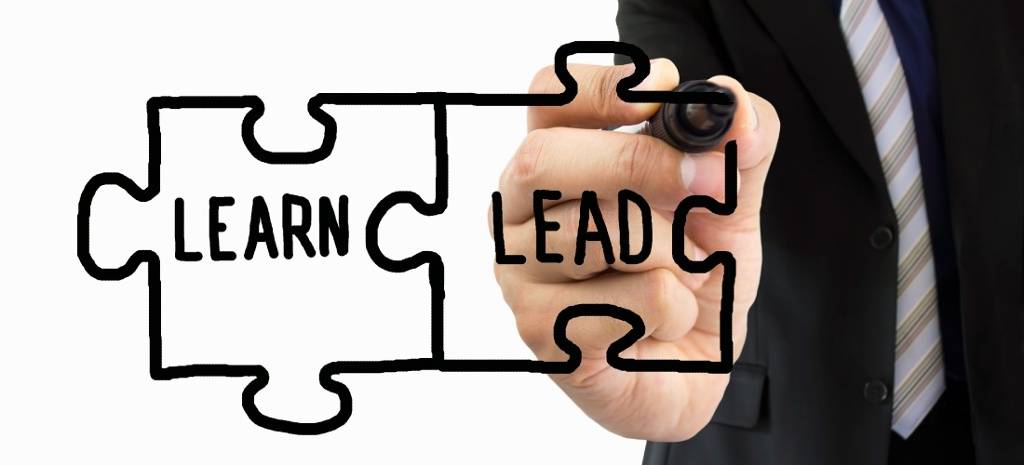
What makes a learning and development leader effective? It’s the ability to understand and deliver the needs of both instructors and learners—in other words, to manage the development process while expanding the capacity for learning.
Mentoring Best Practices: Keep and Tweak The Transfer of Knowledge

iStock_86366583_MEDIUM.jpgApprenticeship and mentorship programs can be extremely effective training tools. Many people in all lines of work learn best and most efficiently through shared experiences and hands-on learning. If your business has not invested in a program where younger employees are able to benefit from the experience and real-world knowledge of veteran employees, chances are that you are missing out on a real opportunity.