Online or Blended: Which is Better?
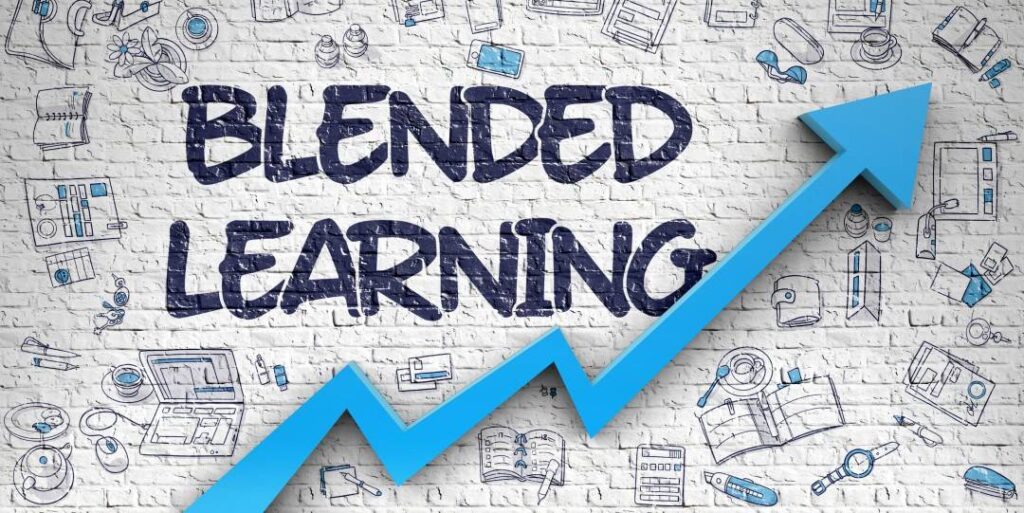
If you Google “online or blended?” you’ll find a number of opinions, the surprising majority of which offer a concrete answer: blended. But is that true? Is one delivery method really superior to another?
Once Upon a Time, Stories Transformed eLearning
Story-based learning (SBL) uses narrative as the main way to present course material. And there are multiple formats this strategy can take on: video or audio production, written text, dramatic scripts, live storytelling, interactive narratives (“choose your own adventure” stories), and gamification are a few examples. Courses may present content to learners in the form of stories, or learners may tell their own narratives as a way of integrating new concepts into their lives.
Is Your Training Effective?
What makes a learning and development leader effective? It’s the ability to understand and deliver the needs of both instructors and learners—in other words, to manage the development process while expanding the capacity for learning.
Effective Employee Onboarding: What You Should Know

When we talk about organizational transitions, we are often talking about the large scale—structural reorganization, mergers, new leadership, or going public. But smaller, ongoing transitions have a profound impact on the wellbeing of the overall company. One of the most important of these smaller transitions is onboarding new employees.
Experiential Learning Theory: Learning by Doing

Let’s say you want to teach someone to drive a car. You, as the instructional designer of Driver’s Ed, might choose to assign a hefty textbook—perhaps the manual to the car—as well as a pamphlet about traffic laws. You may quiz your student on the contents of the reading material and find that he can answer all the questions correctly. So you give him an A, and hand him a set of keys. But when he gets into the car, he is dumbfounded. After all, he has never put keys in an ignition before.
MOOCs: Effective Instruction or Pedagogical Disaster?

The last few years have seen a tremendous surge of interest in Massive Open Online Courses(MOOCs). Just last month, Harvard and MIT jointly published a large research study examining the trends emerging from MOOCs their universities offered in the last two years.
What Can We Learn from 50 Years of Project Management?

What can history teach us about being better project managers in today’s workplace?
An article published in the International Journal of Project Management earlier this year took on the task of combing through fifty years of project management (PM) research to answer this very question. Because PM research is often organized in silos—with practitioners sticking to their own fields—there has been a need for a more holistic perspective on the practice of PM itself. So the authors of “Emergent trends and passing fads in project management research: A scientometric analysis of changes in the field” mapped out data to identify key trends that have emerged and faded in the last five decades.
5 Ways to Boost Employee Engagement

Roberta arrives at her workplace on time each morning, with an air of fresh energy. She says hello warmly to her colleagues before sitting down at her desk and beginning work. Before long, she is absorbed in her tasks, yet her energy never dissipates. After lunch, she attends a meeting, where she asks questions and writes down action items for follow-up. A coworker catches her in the hallway to ask a question, and she listens intently before replying.
Why Will My Project Fail?

If you’re a project manager, or about to begin a project with a team, we have some data that might scare you. While statistics vary across industries, the general consensus is that the number of projects that fail is too high.
Letting Learners Choose Their Own Path

The ultimate goal of any effective instructional endeavor is to impart knowledge or skills onto a learner, right? Some teachers and course developers think of this within an instructor-led framework, in which students are simply receptacles for pre-packaged content delivered by a teacher. But there are problems with this perspective. When learners receive homogenous content, there are going to be some who struggle with comprehension because they have different learning styles (in addition to having diverse backgrounds, abilities, and learning goals).
Building Organizational Well-being from the Ground Up

“Organizational well-being” is a term that’s tossed around in discussions about company success and longevity quite a bit these days, but it’s still a concept taken lightly by many companies—at a cost.
Making Asynchronous Learning Work for You

More and more instructional designers are opting for online learning, partly because many Robot_2global organizations comprise virtual teams that conduct all training and business online, and partly because some studies say that online learning is actually more effective than face-to-face instruction.